The Princeton Economic History of the Western World Series by Kyle Harper, Walter Scheidel, Gregory Clark, Ran Abramitzky

3.88 · 32 ratings
  • Plagues upon the Earth: Disease and the Course of Human History (The Princeton Economic History of the Western World #1)
    #1

    Plagues upon the Earth: Disease and the Course of Human History (The Princeton Economic History of the Western World #1)

    Kyle Harper

    Rated: 4.17 of 5 stars
    · 6 ratings · published 2021

    How pathogenic microbes have been an intimate part of human history from the beginning--and how our deadliest germs and biggest pandemics are the product of our success as a speciesPlagues upon the Earth is a monumental history of humans and their germs... more

  • A Farewell to Alms: A Brief Economic History of the World (The Princeton Economic History of the Western World #27)
    #27

    A Farewell to Alms: A Brief Economic History of the World (The Princeton Economic History of the Western World #27)

    Gregory Clark

    Rated: 3.75 of 5 stars
    · 12 ratings · published 2007

    Why are some parts of the world so rich and others so poor? Why did the Industrial Revolution--and the unprecedented economic growth that came with it--occur in eighteenth-century England, and not at some other time, or in some other place? Why didn't industrialization make the whole world rich--and why did it make large parts of the world even poorer? In "A Farewell to Alms," Gregory Clark tackles these profound questions and suggests a new and provocative way in which culture--not... more

  • The Mystery of the Kibbutz: Egalitarian Principles in a Capitalist World (The Princeton Economic History of the Western World #73)
    #73

    The Mystery of the Kibbutz: Egalitarian Principles in a Capitalist World (The Princeton Economic History of the Western World #73)

    Ran Abramitzky

    Rated: 4.00 of 5 stars
    · 2 ratings · published 2018

    How the kibbutz movement thrived despite its inherent economic contradictions and why it eventually declinedThe kibbutz is a social experiment in collective living that challenges traditional economic theory. By sharing all income and resources equally among its members, the kibbutz system created strong incentives to free ride or―as in the case of the most educated and skilled―to depart for the city... more

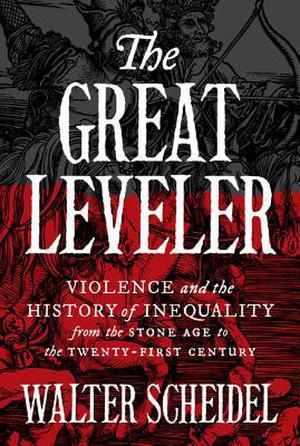
  • The Great Leveler: Violence and the History of Inequality from the Stone Age to the Twenty-First Century (The Princeton Economic History of the Western World #74)
    #74

    The Great Leveler: Violence and the History of Inequality from the Stone Age to the Twenty-First Century (The Princeton Economic History of the Western World #74)

    Walter Scheidel

    Rated: 3.83 of 5 stars
    · 12 ratings · published 2017

    How only violence and catastrophes have consistently reduced inequality throughout world historyAre mass violence and catastrophes the only forces that can seriously decrease economic inequality? To judge by thousands of years of history, the answer is yes. Tracing the global history of inequality from the Stone Age to today, Walter Scheidel shows that inequality never dies peacefully. Inequality declines when carnage and disaster strike and increases when peace and stability return... more

Find similar series to The Princeton Economic History of the Western World  ❯