Les Rougon-Macquart Series by Émile Zola, Georges Bellenger, Valerie Minogue, Esther Benítez

3.93 · 290 ratings
  • The Fortune of the Rougons (Les Rougon-Macquart #1)
    #1

    The Fortune of the Rougons (Les Rougon-Macquart #1)

    Émile Zola

    Rated: 3.83 of 5 stars
    · 18 ratings · published 1871

    The Fortune of the Rougons is the first in Zola's famous Rougon-Macquart series of novels. In it we learn how the two branches of the family came about, and the origins of the hereditary weaknesses passed down the generations. Murder, treachery, and greed are the keynotes, and just as the Empire was established through violence, the "fortune" of the Rougons is paid for in blood... more

  • The Kill (Les Rougon-Macquart #2)
    #2

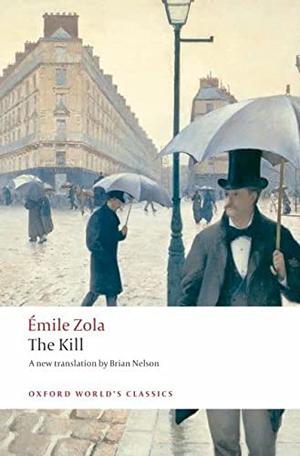
    The Kill (Les Rougon-Macquart #2)

    Émile Zola

    Rated: 3.83 of 5 stars
    · 18 ratings · published 1871

    The Kill (La Cur�e) is the second volume in Zola's great cycle of twenty novels, Les Rougon-Macquart, and the first to establish Paris - the capital of modernity - as the centre of Zola's narrative world. Conceived as a representation of the uncontrollable 'appetites' unleashed by the Second Empire (1852-70) and the transformation of the city by Baron Haussmann, the novel combines into a single, powerful vision the twin themes of lust for money and lust for pleasure... more

  • The Belly of Paris (Les Rougon-Macquart #3)
    #3

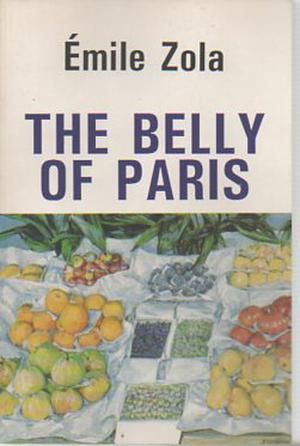
    The Belly of Paris (Les Rougon-Macquart #3)

    Émile Zola

    Rated: 3.89 of 5 stars
    · 18 ratings · published 1873

    Part of Emile Zola’s multigenerational Rougon-Macquart saga, The Belly of Paris is the story of Florent Quenu, a wrongly accused man who escapes imprisonment on Devil’s Island. Returning to his native Paris, Florent finds a city he barely recognizes, with its working classes displaced to make way for broad boulevards and bourgeois flats. Living with his brother’s family in the newly rebuilt Les Halles market, Florent is soon caught up in a dangerous maelstrom of food and politics... more

  • The Conquest of Plassans (Les Rougon-Macquart #4)
    #4

    The Conquest of Plassans (Les Rougon-Macquart #4)

    Émile Zola, Esther Benítez

    Rated: 3.93 of 5 stars
    · 14 ratings · published 1874

    The Conquest of Plassans (Rougon-Macquart): The Rougon family, in M. Zola's narrative, rises to fortune, and the town of Plassans (really Aix-en-Provence) bows down before its power. But time passes, the revolt of the clergy supervenes, by their influence the town chooses a Royalist Marquis as deputy, and it becomes necessary to conquer it once again... more

  • His Excellency Eugène Rougon (Les Rougon-Macquart #6)
    #6

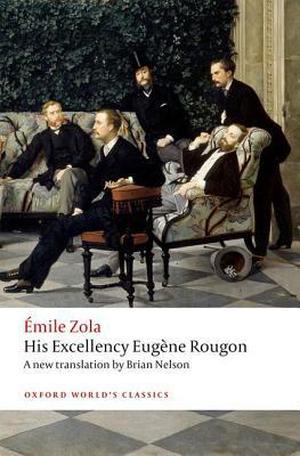
    His Excellency Eugène Rougon (Les Rougon-Macquart #6)

    Émile Zola

    Rated: 3.64 of 5 stars
    · 14 ratings · published 1876

    'He loved power for power's sake . . . He was without question the greatest of the Rougons.'His Excellency Eugene Rougon (1876) is the sixth novel in Zola's twenty-volume Rougon-Macquart cycle. A political novel set in the corridors of power and in the upper echelons of French Second Empire society, including the Imperial court, it focuses on the fluctuating fortunes of the authoritarian Eugene Rougon, the "vice-Emperor." But it is more than just a chronicle... more

  • L'Assommoir (Les Rougon-Macquart #7)
    #7

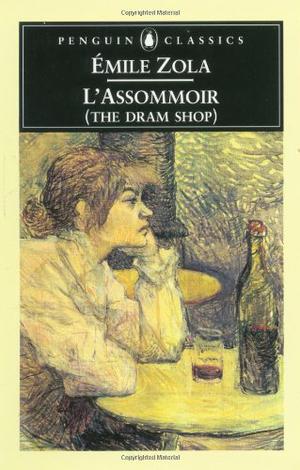
    L'Assommoir (Les Rougon-Macquart #7)

    Émile Zola

    Rated: 4.04 of 5 stars
    · 24 ratings · published 1876

    The seventh novel in the Rougon-Macquart cycle, L'Assommoir (1877) is the story of a woman's struggle for happiness in working-class Paris. At the center of the story stands Gervaise, who starts her own laundry and for a time makes a success of it. But her husband soon squanders her earnings in the Assommoir, a local drinking spot, and gradually the pair sink into poverty and squalor... more

  • Nana (Les Rougon-Macquart #9)
    #9

    Nana (Les Rougon-Macquart #9)

    Émile Zola

    Rated: 3.85 of 5 stars
    · 26 ratings · published 1880

    Nana opens in 1867, the year of the World Fair, when Paris, thronged by a cosmopolitan elite, was the perfect target for Zola's scathing denunciation of hypocrisy and fin-de-siecle moral corruption. In this new translation, the fate of Nana—the Helen of Troy of the second Empire, and daughter of the laundress in L'Assommoir—is now rendered in racy, stylish English.

  • Piping Hot! (Les Rougon-Macquart #10)
    #10

    Piping Hot! (Les Rougon-Macquart #10)

    Émile Zola, Georges Bellenger

    Rated: 3.93 of 5 stars
    · 14 ratings · published 1882

    Zola (1840-1902) was a French novelist, playwright and journalist, and the best-known practitioner of the literary school of naturalism. He was nominated for the first and second Nobel Prize in Literature in 1901 and 1902. More than half of Zola's novels were part of a set of 20 known collectively as Les Rougon-Macquart, examining two branches of a family - the respectable Rougons and the disreputable Macquarts - over five generations... more

  • The Ladies' Paradise (Les Rougon-Macquart #11)
    #11

    The Ladies' Paradise (Les Rougon-Macquart #11)

    Émile Zola

    Rated: 3.96 of 5 stars
    · 24 ratings · published 1883

    The Ladies Paradise (Au Bonheur des Dames) recounts the rise of the modern department store in late nineteenth-century Paris. The store is a symbol of capitalism, of the modern city, and of the bourgeois family: it is emblematic of changes in consumer culture, and the changes in sexual attitudes and class relations taking place at the end of the century. This new translation of the eleventh novel in Zola's Rougon-Macquart cycle captures the spirit of one of his greatest works.

  • Germinal (Les Rougon-Macquart #13)
    #13

    Germinal (Les Rougon-Macquart #13)

    Émile Zola

    Rated: 4.14 of 5 stars
    · 28 ratings · published 1885

    The thirteenth novel in Émile Zola’s great Rougon-Macquart sequence, Germinal expresses outrage at the exploitation of the many by the few, but also shows humanity’s capacity for compassion and hope.Etienne Lantier, an unemployed railway worker, is a clever but uneducated young man with a dangerous temper. Forced to take a back-breaking job at Le Voreux mine when he cannot get other work, he discovers that his fellow miners are ill, hungry, in debt, and unable to feed and clothe their families... more

  • The Masterpiece (Les Rougon-Macquart #14)
    #14

    The Masterpiece (Les Rougon-Macquart #14)

    Émile Zola

    Rated: 4.00 of 5 stars
    · 18 ratings · published 1886

    The Masterpiece is the tragic story of Claude Lantier, an ambitious and talented young artist who has come from the provinces to conquer Paris but is conquered instead by the flaws of his own genius. Set in the 1860s and 1870s, it is the most autobiographical of the twenty novels in Zola's Rougon-Macquart series. It provides a unique insight into Zola's career as a writer and his relationship with Cezanne, a friend since their schooldays in Aix-en-Provence... more

  • The Earth (Les Rougon-Macquart #15)
    #15

    The Earth (Les Rougon-Macquart #15)

    Émile Zola

    Rated: 4.07 of 5 stars
    · 14 ratings · published 1887

    When Jean Macquart arrives in the peasant community of Beauce, where farmers have worked the same land for generations, he quickly finds himself involved in the corrupt affairs of the local Fouan family. Aging and Lear-like, Old Man Fouan has decided to divide his land between his three children: his penny-pinching daughter Fanny, his eldest son - a far from holy figure known as 'Jesus Christ' - and the lecherous Buteau, Macquart's friend... more

  • The Dream (Les Rougon-Macquart #16)
    #16

    The Dream (Les Rougon-Macquart #16)

    Émile Zola

    Rated: 3.57 of 5 stars
    · 14 ratings · published 1888

    Written as a "passport to the Academy," this novel stands alone among the Rougon-Macquart series for its pure, idyllic grace. Angelique, a daughter of Sidonie Rougon (La Curee), had been deserted by her mother, and was adopted by a maker of ecclesiastical embroideries, who with his wife lived and worked under the shadow of an ancient cathedral... more

  • The Beast Within (Les Rougon-Macquart #17)
    #17

    The Beast Within (Les Rougon-Macquart #17)

    Émile Zola

    Rated: 4.05 of 5 stars
    · 20 ratings · published 1890

    His haunting, impressionistic study of a man's slow corruption by jealousy, Emile Zola's The Beast Within (La Bete Humaine) is translated from the French with an introduction and notes by Roger Whitehouse in Penguin Classics.Roubaud is consumed by a jealous rage when he discovers a sordid secret about his young wife's past. The only way he can rest is by forcing her to help him murder the man involved, but there is a witness - Jacques Lantier, a fellow railway employee... more

  • Money (Les Rougon-Macquart #18)
    #18

    Money (Les Rougon-Macquart #18)

    Émile Zola, Valerie Minogue

    Rated: 3.93 of 5 stars
    · 14 ratings · published 1891

    'The irresistible power of money, a lever that can lift the world. Love and money are the only things.' Aristide Rougon, known as Saccard, is a failed property speculator determined to make his way once more in Paris. Unscrupulous, seductive, and with unbounded ambition, he schemes and manipulates his way to power... more

  • La Débâcle (Les Rougon-Macquart #19)
    #19

    La Débâcle (Les Rougon-Macquart #19)

    Émile Zola

    Rated: 4.00 of 5 stars
    · 12 ratings · published 1892
    The penultimate novel of the Rougon-Macquart cycle, La Debacle (1892) takes as its subject the dramatic events of the Franco-Prussian War and the Commune of 1870-1. During Zola's lifetime it was the bestselling of all his novels, praised by contemporaries for its epic sweep as well as for its attention to historical detail. La Debacle seeks to explain why the Second Empire ended in a crushing military defeat and revolutionary violence... more

Find similar series to Les Rougon-Macquart  ❯