Popular Culture and Philosophy Series by Courtland Lewis, Paula Smithka, D.E. Wittkower, William Irwin, Gerald J. Erion, Barry Smith, Carolyn Korsmeyer, Jonathan J. Sanford, Jason Holt, Theodore Schick Jr., Gregory Bassham, James Lawler, David Mitsuo Nixon, Mark T. Conard, Raja Halwani, Eric Bronson, Joseph A. Zeccardi, J.R. Lombardo, Deborah Knight, Carl Matheson, Dale E. Snow, James J. Snow, Paul A. Cantor, Daniel Barwick, David Vessey, Jennifer L. McMahon, James M. Wallace, David L. G. Arnold, Kelly Dean Jolley, Lou Marinoff, Idris Samawi Hamid, William Jaworski, Ben Witherington III, Jorge J.E. Gracia, Henry Nardone, Slavoj Žižek, Martin A. Danahay, Mark A. Wrathall, Nick Bostrom, David Detmer, Theodore Gracyk, Anna Lannstrom, Brandon W. Forbes, David Baggett, Shawn E. Klein, Tom Morris, James B. South, Jeffery Nicholas, Joseph Westfall, Luke Cuddy

3.95 · 159 ratings
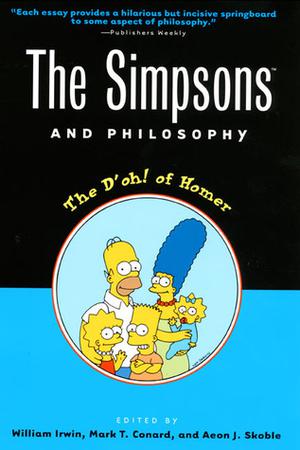
  • The Simpsons and Philosophy: The D'oh! of Homer (Popular Culture and Philosophy #2)
    #2

    The Simpsons and Philosophy: The D'oh! of Homer (Popular Culture and Philosophy #2)

    William Irwin, Mark T. Conard, Raja Halwani, Eric Bronson, Gerald J. Erion, Joseph A. Zeccardi, J.R. Lombardo, Deborah Knight, Carl Matheson, Dale E. Snow, James J. Snow, James Lawler, Paul A. Cantor, Jason Holt, Daniel Barwick, David Vessey, Jennifer L. McMahon, James M. Wallace, David L. G. Arnold, Kelly Dean Jolley

    Rated: 3.44 of 5 stars
    · 16 ratings · published 2001

    This unconventional and lighthearted introduction to the ideas of the major Western philosophers examines The Simpsons — TV’s favorite animated family. The authors look beyond the jokes, the crudeness, the attacks on society — and see a clever display of irony, social criticism, and philosophical thought. The writers begin with an examination of the characters... more

  • The Matrix and Philosophy: Welcome to the Desert of the Real (Popular Culture and Philosophy #3)
    #3

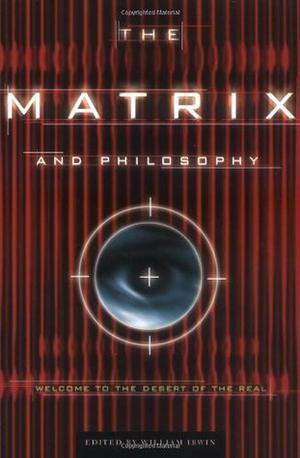
    The Matrix and Philosophy: Welcome to the Desert of the Real (Popular Culture and Philosophy #3)

    William Irwin, Gerald J. Erion, Barry Smith, Carolyn Korsmeyer, Jonathan J. Sanford, Jason Holt, Theodore Schick Jr., Gregory Bassham, James Lawler, David Mitsuo Nixon

    Rated: 3.86 of 5 stars
    · 14 ratings · published 2002

    The Matrix conveys the horror of a false world made of nothing but perceptions. Based on the premise that reality is a dream controlled by malevolent forces, it is one of the most overtly philosophical movies ever to come out of Hollywood... more

  • Buffy the Vampire Slayer and Philosophy: Fear and Trembling in Sunnydale (Popular Culture and Philosophy #4)
    #4

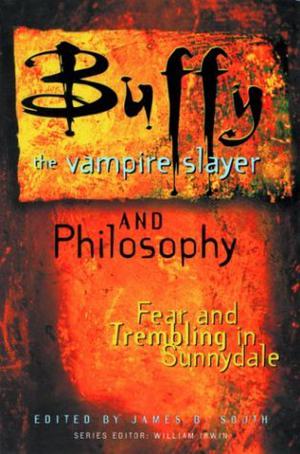
    Buffy the Vampire Slayer and Philosophy: Fear and Trembling in Sunnydale (Popular Culture and Philosophy #4)

    James B. South

    Rated: 4.00 of 5 stars
    · 16 ratings · published 2003

    Twenty-three essays by young professional philosophers examine crucial ethical and metaphysical aspects of the Buffyverse (the world of Buffy). Though the show already attracted much scholarly attention, this is the first book to fully disinter the intellectual issues... more

  • The Lord of the Rings and Philosophy: One Book to Rule Them All (Popular Culture and Philosophy #5)
    #5

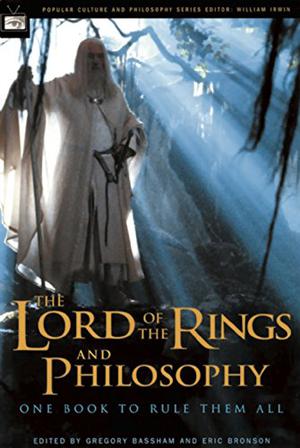
    The Lord of the Rings and Philosophy: One Book to Rule Them All (Popular Culture and Philosophy #5)

    Gregory Bassham, Eric Bronson

    Rated: 4.22 of 5 stars
    · 18 ratings · published 2003

    Can power be wielded for good, or must it always corrupt? Does technology destroy the truly human? Is beer essential to the good life? The Lord of the Rings raises many such searching questions, and this book attempts some answers... more

  • Harry Potter and Philosophy: If Aristotle Ran Hogwarts (Popular Culture and Philosophy #9)
    #9

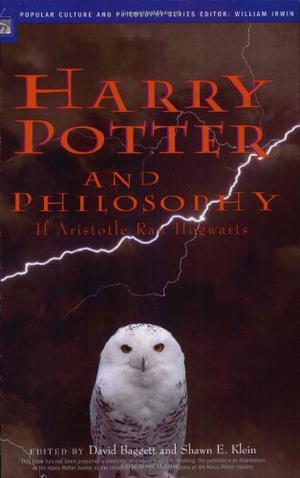
    Harry Potter and Philosophy: If Aristotle Ran Hogwarts (Popular Culture and Philosophy #9)

    David Baggett, Shawn E. Klein

    Rated: 4.46 of 5 stars
    · 24 ratings · published 2004

    In Harry Potter and Philosophy, seventeen philosophical experts unlock some of Hogwarts' secret panels, and uncover surprising insights that are enlightening both for wizards and the most discerning muggles.

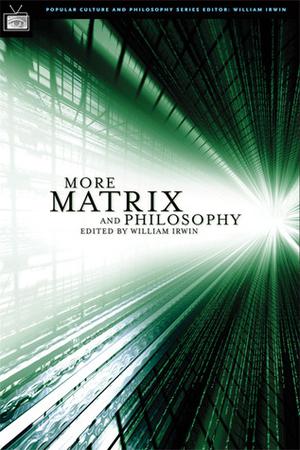
  • More Matrix and Philosophy: Revolutions and Reloaded Decoded (Popular Culture and Philosophy #11)
    #11

    More Matrix and Philosophy: Revolutions and Reloaded Decoded (Popular Culture and Philosophy #11)

    William Irwin, Lou Marinoff, Idris Samawi Hamid, William Jaworski, Ben Witherington III, Jorge J.E. Gracia, Henry Nardone, Gregory Bassham, Slavoj Žižek, James Lawler, Martin A. Danahay, Mark A. Wrathall, Theodore Schick Jr., Nick Bostrom, David Detmer, Theodore Gracyk, Anna Lannstrom

    Rated: 4.00 of 5 stars
    · 4 ratings · published 2005

    This follow-up to the hugely successful The Matrix and Philosophy is broken down into seven "scenes" that explore some of the deeper issues in the movie series. Scene one examines the issues of fate, fortune, causation, and determinism in the trilogy. Scene two asks readers to consider the concept of freedom in the film and in "reality." Scene three analyzes the metaphysical links and breakdowns between the three movies... more

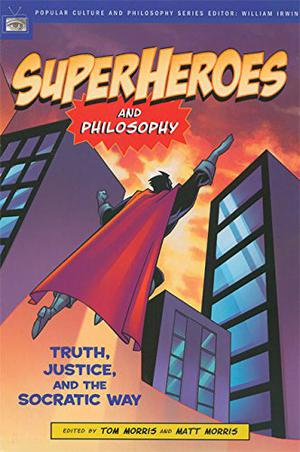
  • Superheroes and Philosophy: Truth, Justice, and the Socratic Way (Popular Culture and Philosophy #13)
    #13

    Superheroes and Philosophy: Truth, Justice, and the Socratic Way (Popular Culture and Philosophy #13)

    Tom Morris

    Rated: 3.80 of 5 stars
    · 10 ratings · published 2001

    As every serious comic book reader can tell, superheroes aren't tackling just brutish villains; they're grappling with Big Questions. In every adventure, Superman, Batman, the X-Men, and other extraordinarily empowered individuals are wrestling with problems of good and evil; ethical questions about violence in a good cause; the metaphysics of personal identity; and the perils of enforcing justice outside the law... more

  • The Chronicles of Narnia and Philosophy: The Lion, the Witch, and the Worldview (Popular Culture and Philosophy #15)
    #15

    The Chronicles of Narnia and Philosophy: The Lion, the Witch, and the Worldview (Popular Culture and Philosophy #15)

    Gregory Bassham, William Irwin

    Rated: 4.13 of 5 stars
    · 8 ratings · published 2005

    The Chronicles of Narnia series has entertained millions of readers, both children and adults, since the appearance of the first book in 1950. Here, scholars turn the lens of philosophy on these timeless tales. Engagingly written for a lay audience, these essays consider a wealth of topics centered on the ethical, spiritual, mythic, and moral resonances in the adventures of Aslan, the Pevensie children, and the rest of the colorful cast... more

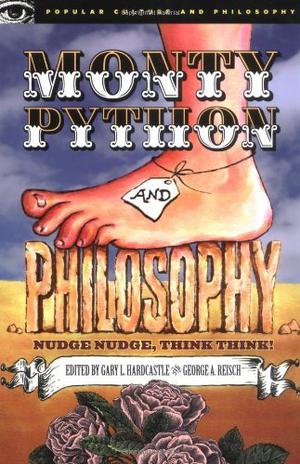
  • Monty Python and Philosophy: Nudge Nudge, Think Think! (Popular Culture and Philosophy #19)
    #19

    Monty Python and Philosophy: Nudge Nudge, Think Think! (Popular Culture and Philosophy #19)

    Gary L. Hardcastle, George A. Reisch, Stephen Faison

    Rated: 3.78 of 5 stars
    · 9 ratings · published 2006

    From the 1970s cult TV show, Monty Python’s Flying Circus, to the current hit musical Spamalot, the Monty Python comedy troupe has been at the center of popular culture and entertainment. The Pythons John Cleese, Graham Chapman, Eric Idle, Terry Jones, Michael Palin, and Terry Gilliam are increasingly recognized and honored for their creativity and enduring influence in the worlds of comedy and film. Monty Python and Philosophy extends that recognition into the world of philosophy... more

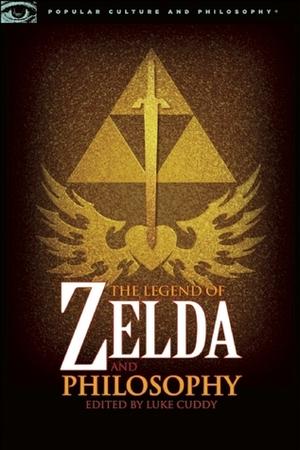
  • The Legend of Zelda and Philosophy: I Link Therefore I Am (Popular Culture and Philosophy #36)
    #36

    The Legend of Zelda and Philosophy: I Link Therefore I Am (Popular Culture and Philosophy #36)

    Luke Cuddy

    Rated: 3.63 of 5 stars
    · 8 ratings · published 2008

    With both young and adult gamers as loyal fans, The Legend of Zelda is one of the most beloved video game series ever created... more

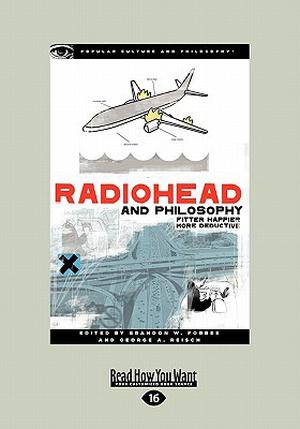
  • Radiohead and Philosophy: The Wrath of Kant (Popular Culture and Philosophy #38)
    #38

    Radiohead and Philosophy: The Wrath of Kant (Popular Culture and Philosophy #38)

    Brandon W. Forbes

    Rated: 3.67 of 5 stars
    · 6 ratings · published 2009

    Not only is Radiohead the most innovative and influential rock band-it's also the most philosophically and culturally relevant. Since the 1993 breakthrough hit "Creep," the band keeps on making waves, with its view of the Bush presidency (Hail to the Thief), its anti-corporatism, its ecologically conscious road tours, its videos, and its decision to sell In Rainbows online at a 'pay whatever you want' price... more

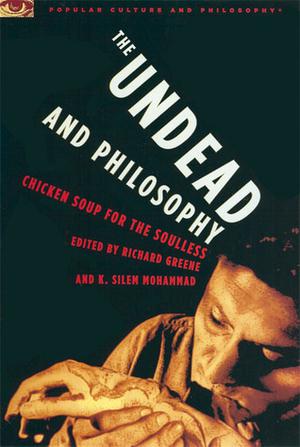
  • The Undead and Philosophy: Chicken Soup for the Soulless (Popular Culture and Philosophy #49)
    #49

    The Undead and Philosophy: Chicken Soup for the Soulless (Popular Culture and Philosophy #49)

    Richard V. Greene, K. Silem Mohammad

    Rated: 3.67 of 5 stars
    · 6 ratings · published 2006

    Though Bram Stoker coined the term, the undead have stalked the human imagination for eons, appearing in the myths and legends of nearly all cultures. The concept of people, or unpeople, interacting with others while devoid of humanity provides a wealth of material for philosophical speculation... more

  • Doctor Who and Philosophy (Popular Culture and Philosophy #55)
    #55

    Doctor Who and Philosophy (Popular Culture and Philosophy #55)

    Courtland Lewis, Paula Smithka

    Rated: 3.88 of 5 stars
    · 8 ratings · published 2010

    Not only is "Doctor Who" the longest-running science fiction TV show in history, but it has also been translated into numerous languages, broadcast around the world, and referred to as the oway of the futureOCO by some British politicians. The Classic "Doctor Who" series built up a loyal American cult following, with regular conventions and other activities... more

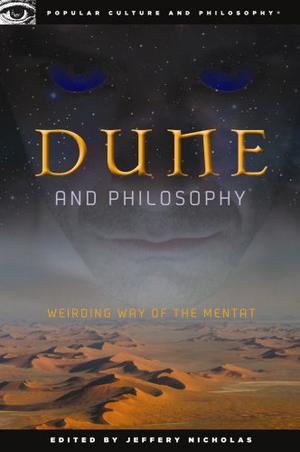
  • Dune and Philosophy: Weirding Way of the Mentat (Popular Culture and Philosophy #56)
    #56

    Dune and Philosophy: Weirding Way of the Mentat (Popular Culture and Philosophy #56)

    Jeffery Nicholas

    Rated: 4.00 of 5 stars
    · 4 ratings · published 2011

    Frank Herbert's Dune is the biggest-selling science fiction story of all time; the original book and its numerous sequels have transported millions of readers into the alternate reality of the Duniverse. Dune and Philosophy raises intriguing questions about the Duniverse in ways that will be instantly meaningful to fans... more

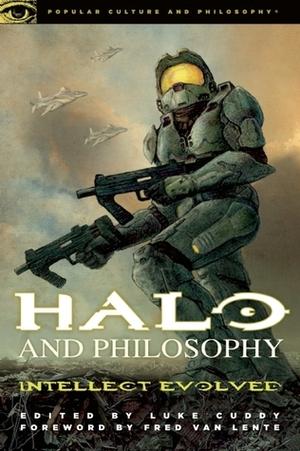
  • Halo and Philosophy: Intellect Evolved (Popular Culture and Philosophy #59)
    #59

    Halo and Philosophy: Intellect Evolved (Popular Culture and Philosophy #59)

    Luke Cuddy

    Rated: 4.00 of 5 stars
    · 2 ratings · published 2011

    Since the Doom series, First Person Shooter (FPS) videogames have ricocheted through the gaming community, often reaching outside that community to the wider public. While critics primarily lampoon FPSs for their aggressiveness and on-screen violence, gamers see something else. Halo is one of the greatest, most successful FPSs ever to grace the world of gaming. Although Halo is a FPS, it has a science-fiction storyline that draws from previous award-winning science fiction literature... more

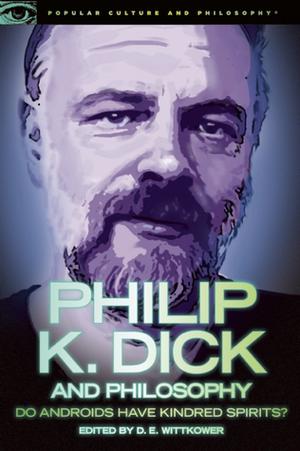
  • Philip K. Dick and Philosophy: Do Androids Have Kindred Spirits? (Popular Culture and Philosophy #63)
    #63

    Philip K. Dick and Philosophy: Do Androids Have Kindred Spirits? (Popular Culture and Philosophy #63)

    D.E. Wittkower

    Rated: 4.00 of 5 stars
    · 2 ratings · published 2011

    Science fiction writer Philip K. Dick (1928–1982) is the giant imagination behind so much recent popular culture—both movies directly based on his writings, such as Blade Runner (based on the novel Do Androids Dream of Electric Sheep?), Total Recall, Minority Report, and The Adjustment Bureau plus cult favorites such as A Scanner Darkly, Imposter, Next, Screamers, and Paycheck and works revealing his powerful influence, such as The Matrix and Inception... more

  • Hannibal Lecter and Philosophy: The Heart of the Matter (Popular Culture and Philosophy #96)
    #96

    Hannibal Lecter and Philosophy: The Heart of the Matter (Popular Culture and Philosophy #96)

    Joseph Westfall

    Rated: 3.75 of 5 stars
    · 4 ratings · published 2015
    Sixteen philosophers come at Hannibal the way he comes at his victims—from unexpected angles and with plenty of surprises thrown in.Hannibal is a revolting monster, and yet a monster with whom we identify because of his intelligence, artistry, and personal magnetism. The chapters in this book pose many questions—and offer intriguing answers—about the enigma of Hannibal Lecter... more

Find similar series to Popular Culture and Philosophy  ❯