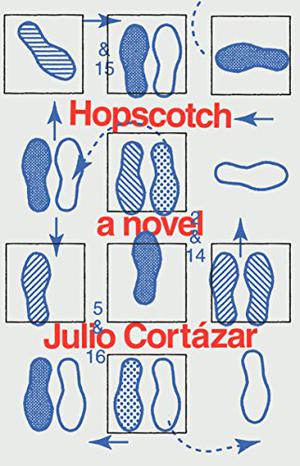
Hopscotch
Julio Cortázar
Rated: 4.22 of 5 stars
4.22
· 42 ratings · 576 pages · Published: 1963
The book is highly influenced by Henry Miller’s reckless and relentless search for truth in post-decadent Paris and Daisetz Teitaro Suzuki’s modal teachings on Zen Buddhism.
Cortázar's employment of interior monologue, punning, slang, and his use of different languages is reminiscent of Modernist writers like Joyce, although his main influences were Surrealism and the French New Novel, as well as the "riffing" aesthetic of jazz and New Wave Cinema.
In 1966, Gregory Rabassa won the first National Book Award to recognize the work of a translator, for his English-language edition of Hopscotch. Julio Cortázar was so pleased with Rabassa's translation of Hopscotch that he recommended the translator to Gabriel García Márquez when García Márquez was looking for someone to translate his novel One Hundred Years of Solitude into English. "Rabassa's One Hundred Years of Solitude improved the original," according to García Márquez.
Tagged as:
- classics 3
- magical realism 3
- 20th century 3
- literary fiction 3
- contemporary 3
- postmodernism 2
- latinx mc 2
- drama 2
- on the move 2
- college/university 2
- psychological 1
- protagonists of colour 1
- action / adventure 1
- Add topics
- format - reader age
- book 1
- adult fiction 1